 Adventure Plans
Bieszczady Loop
At a glance
Use these quick facts to compare this route with others in the thru-hikes hub.
- Distance
- 120 km
- Time needed
- 6 days
- Difficulty
- Moderate
- Continent
- Europe
- Accommodation
- Mountain Huts, Forest Refuges, Wild Camping
- Cost/day (all-in)
- Usd 35 70 Per Day
Why Hike It
The Bieszczady Mountains occupy the far southeastern corner of Poland on the border with Ukraine and Slovakia, and they are fundamentally unlike anywhere else in the country. Their defining feature — the polany — are open, treeless ridgeline pastures that define the Bieszczady skyline completely differently from the forested Beskids or the rocky Tatras. You walk open grass ridges in all directions, with no summit markers, no crowds, and on a clear day a view of the Carpathian arc extending into three countries. The Bieszczady National Park shelters the densest concentration of large carnivores in Poland: brown bears, wolves, and lynx are all present and occasionally visible. European bison from the Bialowieza population have been introduced and roam year-round. It is the quietly extraordinary choice for hikers who have done the Tatras and want the Poland that doesn’t appear in the brochures.
Trail Snapshot
- Distance: 120 km
- Typical duration: 6 days
- Difficulty: Moderate
- Route style: Loop
- Elevation gain: ~4,200 m
- Primary accommodation: Mountain huts (schroniska), forest refuges
Highlights and Signature Sections
The polany ridgeline traverse from Caryca peaks to Tarnica (1,346 m, the highest point in the Bieszczady) is the defining section of any Bieszczady circuit: open, windswept grass ridge with 360° Carpathian views and a quality of silence that is genuinely rare in Central European hiking. The Wólkowate valley descent after the Main Bieszczady Trail (G㈬ówńy Szlak Bieszczadzki) ridge section is old-growth forest — fir and beech with stems wide enough that two people can’t link hands around them. The Ustrzyki Górne valley section reveals what the area’s abandoned Lemko and Boyko village sites look like: stone foundations being reclaimed by forest, a ghost geography of a displaced culture. The wetland section in the northeast — the San river headwaters, a Ramsar wetland site — introduces a bog and marsh landscape that is completely unlike the ridge terrain.
Season Window
June–October. The polany ridges are accessible from June when snow clears. October is exceptional: the beech and fir forest turns auburn and gold, the ridge visibility peaks in autumn high pressure, and the crowds of the summer season clear. Winter requires snowshoes and mountaineering awareness but the Bieszczady in January snowpack are a different world entirely.
Logistics: Food, Water, and Sleep
Mountain huts (schroniska) are distributed around the trail. The primary hub is Ustrzyki Górne (a small resort village at the base of the main trail system) with a hotel, restaurant, and the national park entrance station. Lesko and Ustrzyki Dolne (at the northwest end) are the nearest towns with full resupply. Water from mountain streams throughout; reliable springs near most huts. Wild camping is permitted in the national park with the consent of the park authority (informal standard: camp quietly above the treeline).
Permits and Rules
Bieszczady National Park charges a small entry fee (approx. 6 PLN / €1.50, 2024). Wild camping requires park authority permission but this is routinely granted to registered mountain hikers. Dogs must be on lead in the national park. The zone near the Ukraine border (the eastern boundary of the trail) may have stricter rules during periods of border sensitivity — check current guidance from the park authority before hiking the eastern circuit sections.
Gear Watch
The open polany ridges have no shelter from wind: a wind-and-waterproof jacket is essential even in summer. Bear spray is available and worth carrying given the Bieszczady bear density. Sun protection for the exposed ridge days. Trekking poles for the boggy wetland sections in the northeastern circuit. Carry 2+ days of food from Ustrzyki Górne given the limited inter-hut resupply.
Hazards and Cautions
Autumn fog on the polany can disorient navigation significantly — the trail markers are spaced for clear visibility conditions. Download the trail GPX and carry a physical map (the Compass 1:50,000 Bieszczady map is the standard). Bear encounters are more common here than in most Central European ranges; make noise on forested sections and follow the park authority’s bear encounter guidance. The Ukraine border zone: stay on marked trails and do not approach the border fence.
First-Time Thru-Hiker Strategy
Start at Ustrzyki Górne (accessible by bus from Rzeszów or Lesko) and follow the red Main Bieszczady Trail south and east along the main ridge before looping west through the forest interior. The polany ridge section on days 1–2 sets the Bieszczady tone immediately. The loop works equally well clockwise or anticlockwise; clockwise (south ridge first) gives the best views in the opening days.
Why Hike It
Poland Thru-Hike Route 1 offers a flexible long-distance itinerary for exploring diverse landscapes across Poland.
Trail Snapshot
- Country: Poland
- Continent: europe
- Route type: Placeholder thru-hike concept
- GPX status: Placeholder path reserved pending verification
Read More
-
 Nahuel Huapi Traverse
A long Patagonian traverse built around Bariloche and Nahuel Huapi National Park, combining refuges, forest trails, and prolonged lake-and-ridge travel.
-
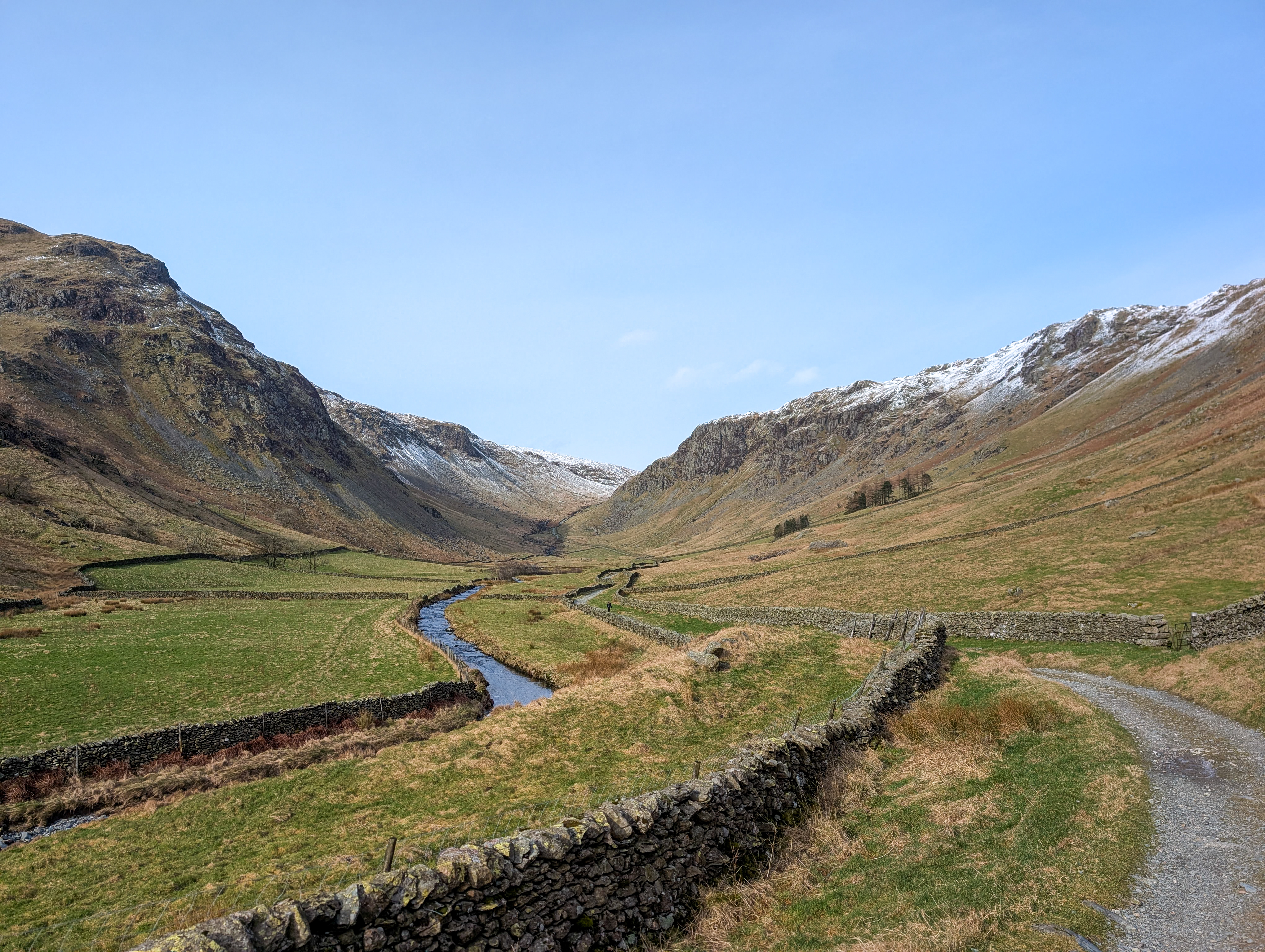 Grey Crag, Tarn Crag and Branstree
This is lovely walk at the top of Longsledddale starting from Sadgill. You'll hike over 3 Wainwrights in some of the more quiet Lake District fells. A great opt…